Why the Workouts That Used to Work Suddenly Stopped (Hormones, Not Laziness)
Quick Answer: The same workouts that worked for years can stop delivering results as hormones shift (perimenopause, cycle changes, chronic stress) alter recovery capacity and how your body responds to training stress. The fix is usually adjusting intensity and recovery, not working harder.
You’re doing the exact routine that worked for a decade. Same intensity, same consistency. And somehow the results have quietly stopped showing up, replaced by more fatigue and slower recovery. This is a real, common, physiological shift — not a discipline problem.

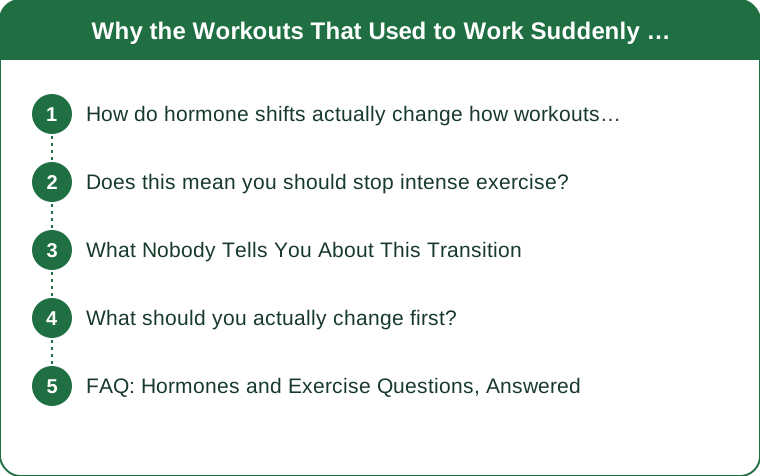
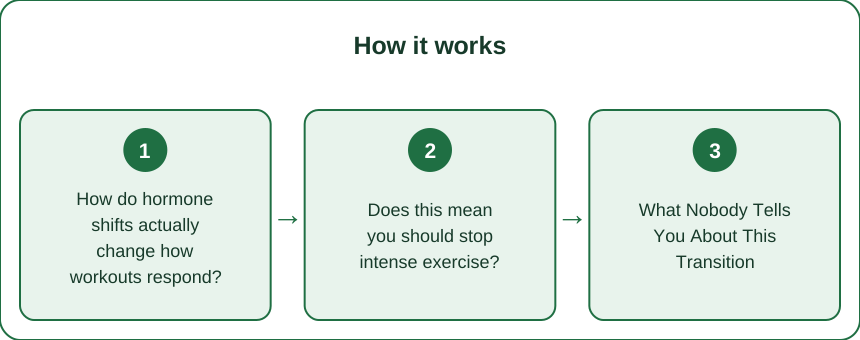
How do hormone shifts actually change how workouts respond?
As estrogen and progesterone fluctuate more (common in perimenopause, but also with chronic stress or major life changes), recovery capacity between hard sessions often drops even when training volume stays the same. The workout that used to leave you recovered in 24 hours might now need 48, and pushing through on the old schedule can compound fatigue instead of building fitness.
Does this mean you should stop intense exercise?
No — strength training in particular remains one of the most protective tools through hormonal transitions, for bone density and metabolic health. The adjustment is usually intensity distribution: more true recovery days, slightly lower volume on hard days, rather than abandoning intensity altogether.

What Nobody Tells You About This Transition
Here’s the part rarely said out loud: it’s not permanent decline, it’s a recalibration period. Many women find that after adjusting training variables (more recovery, tracked strength progression instead of chasing the old cardio-heavy routine), results return — just via a different combination of inputs than what worked at 28.
What should you actually change first?
Add one more true rest or active-recovery day per week, prioritize sleep (a bigger lever during hormonal shifts than in your 20s), and lean more into resistance training relative to steady-state cardio. Track how you feel, not just the scale — energy and strength trends often move before weight does.
FAQ: Hormones and Exercise Questions, Answered
Should I do less exercise during perimenopause?
Not necessarily less — often it’s about redistributing intensity with more recovery built in, rather than cutting overall activity.
Does cortisol from hard workouts make things worse?
For some people, yes — if you’re already under chronic stress, adding maximal-intensity training without adequate recovery can compound fatigue; moderate, well-recovered training tends to work better in that state.
When should this prompt an actual doctor visit?
If fatigue, mood changes, or workout non-response are severe or persistent beyond a few months of adjusted training, that’s worth a conversation with a doctor — this is general information, not medical advice.
TL;DR:
- Hormonal shifts can change recovery capacity even when training stays identical
- This is a real physiological shift, not a discipline or effort problem
- Add recovery days and prioritize sleep before assuming you need to work harder
- Persistent, severe symptoms deserve a doctor’s input — this is general information, not medical advice
Keep Reading
This article is for general informational and styling purposes only. Fit, sizing, and product availability may vary.