Why the Same Cycle Symptoms Feel Worse in Some Months Than Others
Quick Answer: Symptom severity varies month to month because symptoms are produced by the interaction between hormonal changes and everything else going on — sleep debt, psychological stress, training load, illness, alcohol and nutrition all modify how the same hormonal pattern is experienced. Cycle length can also vary by a few days normally, which shifts when symptoms land relative to your week.
Tracking the modifiers is more useful than tracking the symptoms alone.
This is general information, not medical advice.

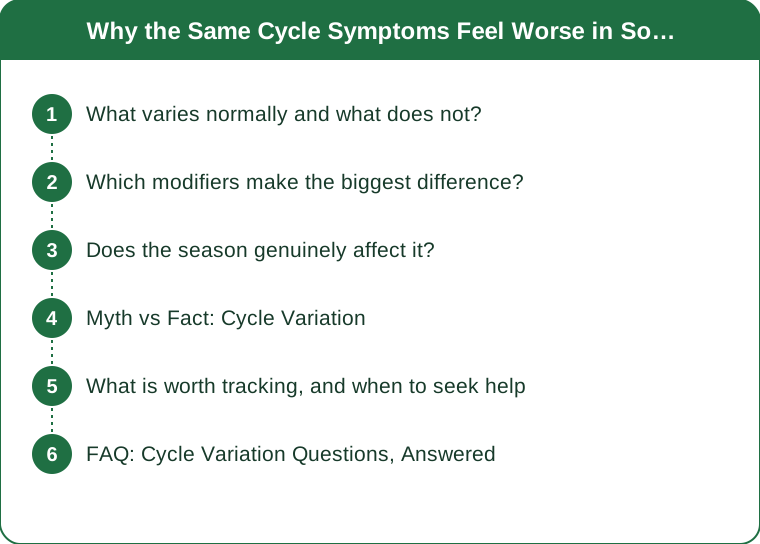
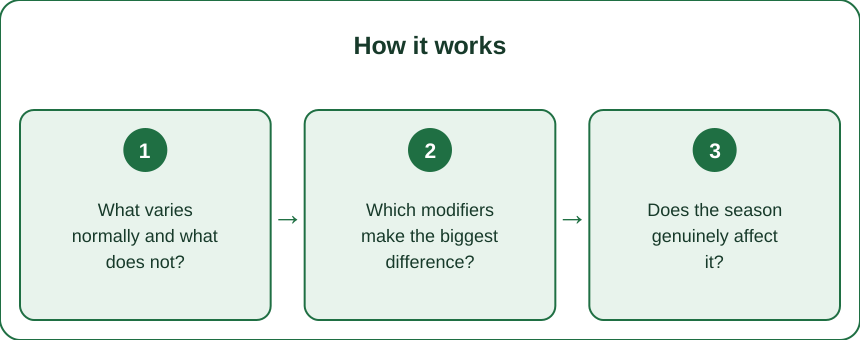
What varies normally and what does not?
Cycle length varies by a few days between cycles in most people, and that is entirely normal. A cycle that is 27 days one month and 31 the next is within ordinary variation.
The luteal phase is the more stable half, typically around 12 to 14 days. Most of the variation happens before ovulation, which is why stress and illness shift the timing of a period more than its arrival.
Symptom intensity is the most variable element of all. Two cycles with nearly identical hormone profiles can produce very different experiences.
Ovulation can be delayed or skipped by significant stress, illness, travel, heavy training or substantial energy deficit, which changes the whole cycle’s timing and symptom pattern.
Which modifiers make the biggest difference?
Sleep is probably the largest single one. Short or disrupted sleep worsens mood symptoms, pain perception and fatigue, and sleep is itself often worse in the luteal phase — which creates a loop.
Psychological stress amplifies symptom perception and can delay ovulation, shifting timing as well as intensity.
Training load matters in both directions. Regular moderate exercise is associated with reduced symptom severity; sudden large increases in load, or training in an energy deficit, tend to worsen things.
Alcohol and caffeine both change more in the luteal phase. Sensitivity to both commonly increases, and both disrupt sleep, which feeds back into everything else.
Underfuelling is frequently the hidden one. Consistently eating below requirements affects the cycle directly and worsens fatigue, mood and sleep at the same time.
Does the season genuinely affect it?
There is evidence for seasonal variation in cycles, though the effects are modest and vary between individuals and latitudes.
Light exposure changes as days shorten, and light affects circadian rhythm, which affects sleep, which affects symptom severity. That chain is well established even where the direct hormonal effect is not.
Autumn brings load changes that are easy to miss. Term starting, schedules changing, more indoor time, less daylight and often a training pattern shift all land within a few weeks.
Temperature affects the tracking, not just the experience. A cooler bedroom changes basal body temperature readings, which can make a chart look irregular when the cycle itself has not changed.
Vitamin D status falls over winter in many regions, and low vitamin D has been associated with worse symptoms in some studies. Worth testing rather than assuming.

Myth vs Fact: Cycle Variation
Myth: A healthy cycle is exactly 28 days. Fact: Typical cycles range roughly from 21 to 35 days, and a few days of variation between cycles is normal. The 28-day figure is an average, not a standard.
Myth: If symptoms are worse, hormones must be higher. Fact: Symptom severity correlates poorly with absolute hormone levels. Sensitivity to change matters more than the level itself.
Myth: Tracking apps predict your cycle accurately. Fact: They predict based on past averages and cannot anticipate a delayed ovulation. A prediction is an estimate, not a measurement.
Myth: You should train less in the luteal phase. Fact: Evidence for cycle-based training periodisation is currently weak and inconsistent. Training by how you actually feel is better supported than training by a phase calendar.
Myth: Bad months are just bad luck. Fact: Most severe months have identifiable contributors — a poor sleep week, a stressful period, an illness, a training spike. They are findable if you track the inputs rather than only the outputs.
What is worth tracking, and when to seek help
Track four inputs alongside symptoms: sleep hours, perceived stress, training load, and alcohol. Three months of that data explains most people’s variable months.
Track cycle start date, not predicted date. Retrospective data is accurate; predictions are not.
Note the timing of symptoms relative to your period, not to the calendar. Symptoms that arrive 10 days before and resolve at onset behave very differently from symptoms that persist through.
Seek medical advice for: periods that soak through protection hourly, pain that stops you functioning or is not helped by standard pain relief, cycles consistently shorter than 21 or longer than 35 days, bleeding between periods or after sex, no period for three months without pregnancy, or severe mood symptoms that affect your ability to function.
Severe premenstrual mood symptoms have a name and a treatment pathway. If mood changes are disabling rather than inconvenient, that is a medical conversation worth having rather than something to manage alone.
None of this is a substitute for a diagnosis. Tracking helps a clinician help you; it does not replace them.
FAQ: Cycle Variation Questions, Answered
How many cycles do I need to track before it is useful?
Three gives you a rough picture; six gives you something you can see patterns in. One cycle tells you almost nothing.
Can travel really shift my cycle?
Yes. Time zone changes, disrupted sleep and travel stress can all delay ovulation, which delays the period. A shift of several days after significant travel is common.
Does an intense training block change things?
A sudden large increase in load, particularly combined with underfuelling, can lengthen cycles or suppress ovulation. Gradual progression with adequate energy intake generally does not.
TL;DR:
- Symptom severity comes from the interaction of hormones with sleep, stress, load and fuelling.
- A few days of cycle length variation is normal; the luteal phase is the more stable half.
- Sleep is probably the largest single modifier, and it worsens in the luteal phase — a loop.
- Track four inputs alongside symptoms for three to six cycles to explain your variable months.
- Disabling pain, disabling mood symptoms, or cycles outside 21 to 35 days warrant medical advice.
The cycle is the constant. Everything you layer on top of it is the variable.
This is general information, not medical advice.
Keep Reading
This article is for general informational and styling purposes only. Fit, sizing, and product availability may vary.