Why Iron Status Changes How Every Piece of Hormone Advice Lands
Quick Answer: Iron deficiency and hormonal issues share a symptom list - fatigue, hair shedding, poor recovery, low mood, cycle irregularity - and active women who menstruate are among the most likely groups to be low. Iron status is measurable with a simple blood test, unlike most of what hormone advice speculates about, so it is worth checking before you spend months adjusting training and diet. Ask about ferritin specifically, not just haemoglobin. This is general information, not medical advice - testing and treatment belong with a clinician.
You have read that your training should change with your cycle, that stress is affecting your hormones, and that your recovery needs work.
All of that might be true. It is also what low iron looks like, and that one is testable.

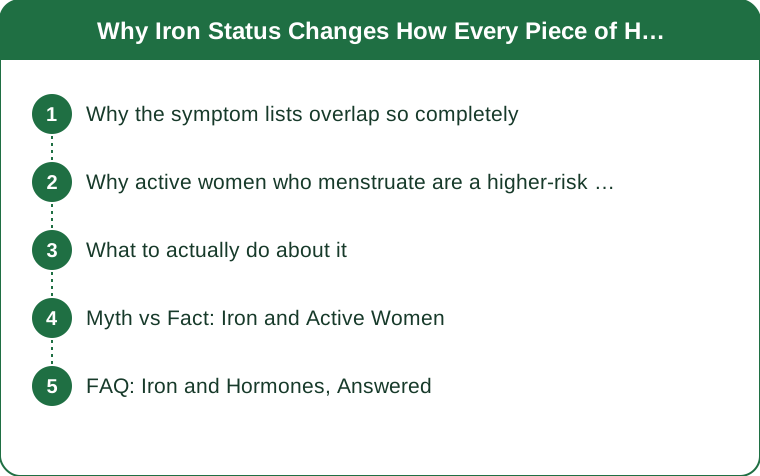
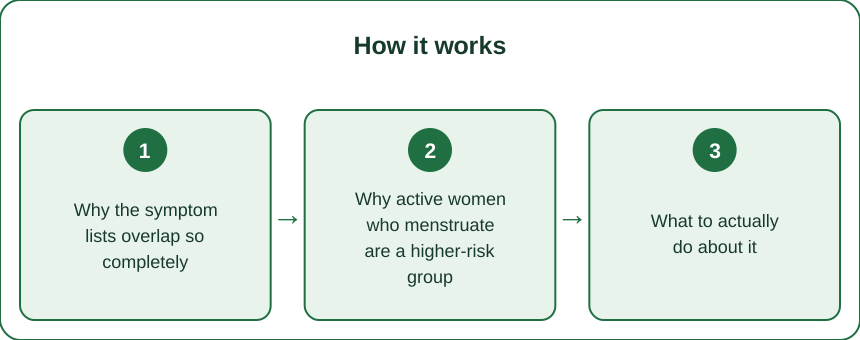
Why the symptom lists overlap so completely
Iron is required to carry oxygen, so low iron reduces the oxygen available to working muscles. The result is fatigue, breathlessness at efforts that used to feel easy, and a heart rate that runs high for the pace - all of which get attributed to overtraining or hormones.
It also affects thermoregulation, which is why feeling cold constantly is a common and rarely-connected symptom.
Hair shedding is a shared symptom. Iron deficiency is a well-recognised contributor to diffuse hair shedding, and it is frequently attributed to hormonal change instead - particularly during seasonal shedding periods in autumn.
Low mood, poor concentration, and irritability appear in both lists, which makes symptom-based self-diagnosis genuinely unreliable here.
Cycle changes go both directions. Heavy periods are a leading cause of iron deficiency, and iron deficiency can itself be associated with cycle disruption - a loop that is difficult to untangle without testing.
And restless legs at night is the one symptom that points more specifically toward iron than toward hormones, which makes it worth mentioning to a doctor if you have it.
Why active women who menstruate are a higher-risk group
Menstrual blood loss is the largest routine iron loss most women have, and heavier periods increase it substantially. This alone accounts for a great deal of the difference in iron status between men and women.
Endurance training adds several smaller losses, including through sweat, small gastrointestinal losses, and mechanical breakdown of red blood cells from repeated foot strike in running.
Training also affects absorption. Hepcidin, a hormone regulating iron uptake, rises for several hours after hard exercise, which reduces how much iron you absorb in that window.
Plant-based and lower-meat diets provide iron in a less absorbable form. Non-haem iron from plants is absorbed considerably less efficiently than haem iron from animal sources, so requirements are higher.
Higher training volume raises demand at the same time as these factors reduce supply, which is why iron issues cluster in women who train seriously.
And normal haemoglobin does not rule it out. You can have depleted iron stores with a haemoglobin still in range - the stores empty first, and symptoms often appear before anaemia does. This is exactly why ferritin is the test to ask about.

What to actually do about it
Ask your doctor for a full iron panel, including ferritin. Ferritin reflects stored iron and is the marker that catches depletion before anaemia. A standard blood count alone can look normal while stores are low.
Mention that you train and roughly how much, because it changes the interpretation. Also mention heavy periods if you have them - it is directly relevant and frequently goes unsaid.
Do not start iron supplements without testing. Iron overload is a genuine risk for some people, supplements interact with other medications, and taking iron unnecessarily causes real side effects. This is a clinician’s decision.
If you are advised to supplement, timing matters. Iron absorbs better away from tea, coffee, dairy, and calcium supplements, and vitamin C alongside it improves uptake meaningfully.
Avoid taking it in the few hours right after hard training, when absorption is temporarily reduced. Morning on an empty stomach or well away from a session is generally better tolerated.
Dietary iron is worth attention regardless. Red meat, liver, shellfish, legumes, tofu, and fortified cereals all contribute, and pairing plant sources with vitamin C improves absorption considerably.
And expect a slow timeline. Rebuilding stores takes months rather than weeks, and feeling better often precedes ferritin normalising - which is a reason to complete the course as advised rather than stopping when symptoms improve.
Myth vs Fact: Iron and Active Women
Myth: If your blood count is normal, your iron is fine. Fact: stores deplete before haemoglobin drops. Ferritin can be low with a normal blood count, and symptoms often appear at that stage.
Myth: Feeling tired while training hard is just part of it. Fact: fatigue that does not improve with rest, alongside breathlessness at easy efforts and a raised heart rate for pace, is worth investigating rather than absorbing.
Myth: You can tell iron deficiency from hormonal issues by symptoms. Fact: the symptom lists overlap almost entirely. Testing is what distinguishes them, and only one of the two is straightforward to measure.
Myth: Everyone who trains should take an iron supplement. Fact: no. Iron overload is a real risk, supplements interact with medications, and unnecessary supplementation causes side effects. Test first, with a clinician.
Myth: Spinach is a great iron source. Fact: it contains iron in a poorly absorbed form, and compounds in it further reduce uptake. Red meat, shellfish, and legumes with vitamin C are considerably more effective.
Myth: If supplementation is needed, you will feel better in a week. Fact: rebuilding stores takes months. Symptoms often improve before ferritin normalises, which is why courses should be completed as advised.
FAQ: Iron and Hormones, Answered
How do I know if it is iron or hormones?
You cannot tell from symptoms - the lists overlap almost completely. A blood test including ferritin distinguishes them, and it is worth doing before making other changes.
What test should I ask for?
A full iron panel including ferritin, not just a standard blood count. Ferritin reflects stored iron and catches depletion before anaemia develops.
Why are active women at higher risk?
Menstrual losses plus sweat losses, small gastrointestinal losses, red cell breakdown from foot strike, and reduced absorption after hard training - all while demand is higher.
Should I just take an iron supplement to be safe?
No. Iron overload is a genuine risk for some people and supplements interact with medications. Test first and follow a clinician’s advice.
When is the best time to take iron if prescribed?
Away from tea, coffee, dairy, and calcium, ideally with a source of vitamin C, and not in the few hours right after hard training when absorption is reduced.
How long until I feel different?
Months rather than weeks to rebuild stores. Symptoms often improve first, which is why the course should be completed as advised rather than stopped early.
When should I see a doctor?
If you have persistent fatigue, heavy periods, hair shedding, breathlessness at easy efforts, or restless legs. This article is general information, not medical advice - testing and treatment belong with a clinician.
TL;DR:
- Iron deficiency and hormonal issues share almost the same symptom list, but only one of them is easy to measure.
- Ask for ferritin specifically - stores deplete before haemoglobin drops, so a normal blood count does not rule it out.
- Active women who menstruate are a higher-risk group through combined losses, reduced absorption, and raised demand.
- Never start iron supplements without testing; overload is a real risk and supplements interact with medications.
- If prescribed, take away from tea, coffee, and dairy, with vitamin C, and not straight after hard training.
This is general information, not medical advice. Persistent fatigue or heavy periods deserve a clinician’s assessment.
Keep Reading
This article is for general informational and styling purposes only. Fit, sizing, and product availability may vary.