Why Basal Body Temperature Readings Shift When the Bedroom Cools
Quick Answer: Basal body temperature is a small signal in a noisy environment - the shift that confirms ovulation is typically only about 0.4 to 1.0F, and ambient bedroom temperature, blanket changes, and window-open habits can all move a reading by a comparable amount. When the season cools, people change bedding, close windows, turn on heating and sleep differently, which is why autumn charts frequently look erratic even in a completely regular cycle. The fix is not a better thermometer - it is holding the sleep environment constant and reading the pattern over several days rather than any single morning.
Your chart made sense all summer. Since the weather turned it looks like noise, and the app is less confident than it used to be.
Most of what changed is in the room, not in you.
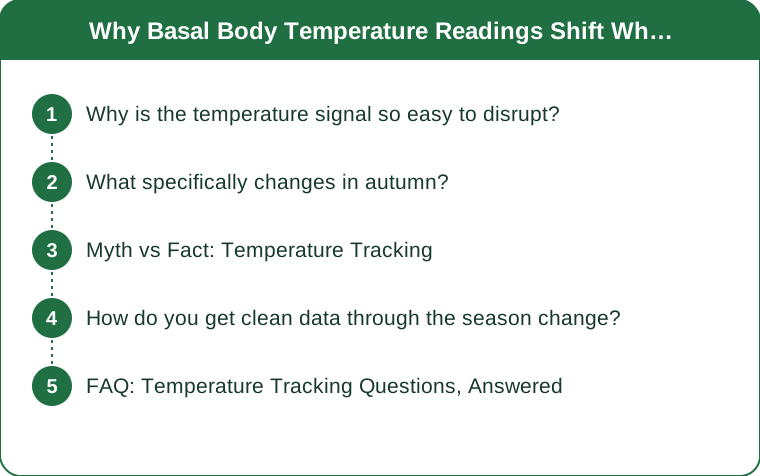
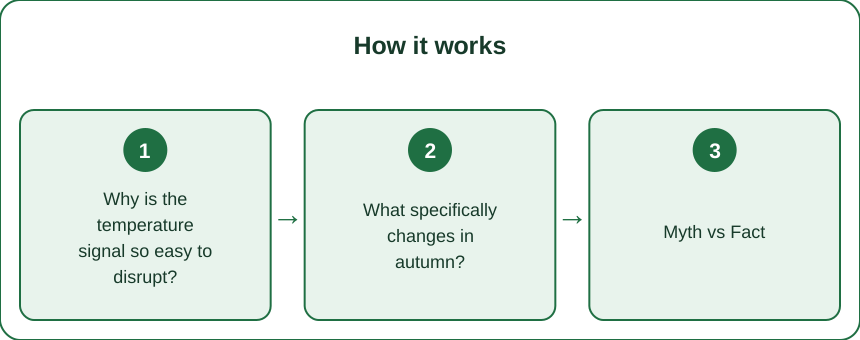
Why is the temperature signal so easy to disrupt?
Because the thing you are measuring is smaller than the things that interfere with it.
After ovulation, rising progesterone raises basal body temperature by roughly 0.4 to 1.0F (about 0.2 to 0.5C) and holds it elevated through the luteal phase. That shift is the entire signal. It is genuine, it is reproducible, and it is small.
Against that, the list of things that can move a single morning reading by a similar magnitude is long: disrupted or short sleep, waking at a different time, alcohol the night before, a mild illness, a warm or cool room, a heavier duvet, a partner in the bed, and taking the reading after getting up.
This is why the standard advice is to read at the same time each morning, before any activity, after at least three to four hours of consecutive sleep. Those conditions are not fussiness; they exist because the confounders are as large as the signal.
Seasonal change alters several confounders at once, which is why autumn is a predictable trouble spot rather than a random one.
The important framing: BBT is a retrospective confirmation of ovulation, not a prediction of it. By the time the shift appears, ovulation has already happened, typically a day or two earlier. Anyone using it for contraception should be doing so within a structured method with proper instruction, and this is general information rather than medical or contraceptive advice.
What specifically changes in autumn?
Four things, and most households change all four within the same fortnight.
Bedding weight. Switching from a summer sheet to a heavier duvet raises skin and core temperature during sleep. The effect is largest in the second half of the night, which is exactly when a morning reading is taken.
Window habits. A window open all summer and closed in autumn changes overnight ambient temperature considerably, and it also changes air movement and humidity.
Heating schedules. Many systems come on early in the morning, which means the room is actively warming in the hour before you wake - the single most disruptive possible pattern for a reading taken on waking. A room warming from 16C to 20C between 5am and 7am is a genuinely different measurement environment.
Sleep timing. As mornings get darker, wake times drift and sleep quality changes. Reading time is one of the strongest determinants of BBT because body temperature follows a circadian curve that is rising steeply in the early morning - a reading taken an hour later can be meaningfully higher purely because of that curve, with nothing hormonal involved.
Together, those four are more than sufficient to make a normal chart look ambiguous, and they explain why the confusion clusters in the two or three weeks after the weather turns rather than being spread through the year.
Myth vs Fact: Temperature Tracking
Myth: A high reading one morning means something happened. Fact: Single readings are close to meaningless. The methods that work look for a sustained shift across three consecutive days relative to the preceding six. One outlier is expected, and most charting rules explicitly allow you to discard it.
Myth: A wearable is more accurate than an oral thermometer. Fact: Different, not simply better. Wearables measure skin or peripheral temperature continuously and use overnight averages, which makes them less sensitive to wake-time variation and more sensitive to ambient temperature and bedding. Oral BBT is the reverse. Both work; mixing them mid-cycle does not.
Myth: You need a special BBT thermometer. Fact: You need one that reads to two decimal places, because the shift you are looking for is a few tenths of a degree. A standard fever thermometer reading to one decimal place is too coarse. Beyond that, consistency of device matters more than brand.
Myth: No clear shift means you did not ovulate. Fact: It frequently means the data was too noisy to show it. Anovulatory cycles do occur and a flat chart can indicate one, but a single ambiguous chart in a month where you changed your bedding is a measurement problem first. Persistently absent shifts across several clean cycles are worth discussing with a clinician.
Myth: Illness ruins the whole cycle’s data. Fact: It ruins those days. Mark them as discarded and read the pattern around them - most charting methods are designed to tolerate a handful of excluded readings.
How do you get clean data through the season change?
Hold the environment constant, standardize the timing, and read the trend rather than the points.
Pick a room temperature and keep it. If you use heating overnight, either keep it constant or set it not to come on before your reading time. A room that is actively warming as you wake is the worst case, and it is easily avoided with a schedule change.
Change bedding between cycles, not mid-cycle. If you are switching to a winter duvet, do it at the start of a new cycle so the change lines up with a chart boundary rather than landing in the middle of your luteal phase.
Standardize wake time as tightly as you can, and record the actual time with each reading. If you read more than about thirty minutes off your usual time, note it and treat that reading as suspect rather than deleting it silently.
Take the reading before anything else - before getting up, before drinking, before looking at your phone if you can manage it. The body temperature curve rises steeply on waking and activity accelerates it.
Add a second signal. Cervical mucus observations are unaffected by room temperature and provide an independent line of evidence. A combined method is substantially more robust through a season change than temperature alone.
And give it a full cycle before drawing conclusions. One disrupted chart in the fortnight you changed your bedding, closed the windows and turned on the heating is not information about your hormones.
This is general information, not medical advice. Cycles that become genuinely irregular, disappear, or change markedly in character are worth a clinician’s assessment rather than more charting.
FAQ: Temperature Tracking Questions, Answered
Does the room temperature really change my reading that much?
It can, and the effect is larger for skin-based wearables than for oral readings. Oral BBT is somewhat buffered because you are measuring closer to core, but a very cold room, a heavier duvet, or heating cycling on before you wake are all capable of moving a reading by a few tenths of a degree - which is the same order as the ovulatory shift itself.
Should I switch to a wearable for winter?
If your main problem is inconsistent wake times, a wearable helps a lot, because it averages across the night rather than depending on one moment. If your main problem is a variable room temperature, it may help less, since skin temperature is more ambient-sensitive. Whichever you choose, do not switch mid-cycle - the baselines are not comparable.
My chart has been flat for a whole cycle. Should I be worried?
One flat cycle, in a month with a lot of environmental change, disrupted sleep, travel or illness, is usually a data problem. Several consecutive clean cycles with no discernible shift is a different matter and worth raising with a clinician, particularly if it comes with changes in cycle length or in bleeding. This is general information, not medical advice.
Can I still track if I work shifts or wake at different times?
Yes, but oral BBT becomes much less reliable, because the circadian temperature curve means the reading time is doing as much work as the hormones. Continuous overnight wearable measurement handles variable schedules considerably better, and combining with cervical mucus observation gives you a signal that does not depend on clock time at all.
TL;DR:
- The ovulatory shift is only about 0.4 to 1.0F - smaller than several ordinary environmental confounders.
- Autumn changes four of them at once: bedding weight, window habits, heating schedules and wake time.
- Heating that comes on before your reading time is the worst case - reschedule it rather than fighting the data.
- Change bedding at a cycle boundary, not mid-luteal.
- Read the three-day sustained shift, not individual mornings. One outlier is expected and can be discarded.
- Add cervical mucus observation - it is unaffected by room temperature and makes the method far more robust.
- Do not switch devices mid-cycle. Wearable and oral baselines are not comparable.
This is general information, not medical advice. Give it one clean cycle before concluding anything about your hormones.
Keep Reading
This article is for general informational and styling purposes only. Fit, sizing, and product availability may vary.