Why Your Workouts Feel Completely Different Week to Week (It's Not Just Motivation)
Quick Answer: Estrogen and progesterone fluctuate predictably across the menstrual cycle, and these shifts genuinely affect energy, strength, and recovery — workouts often feel strongest in the first half of the cycle and more effortful in the days before a period, which is a hormonal pattern, not a motivation problem.
Same program, same effort, same sleep — and yet week two feels like flying while week four feels like wading through wet sand.
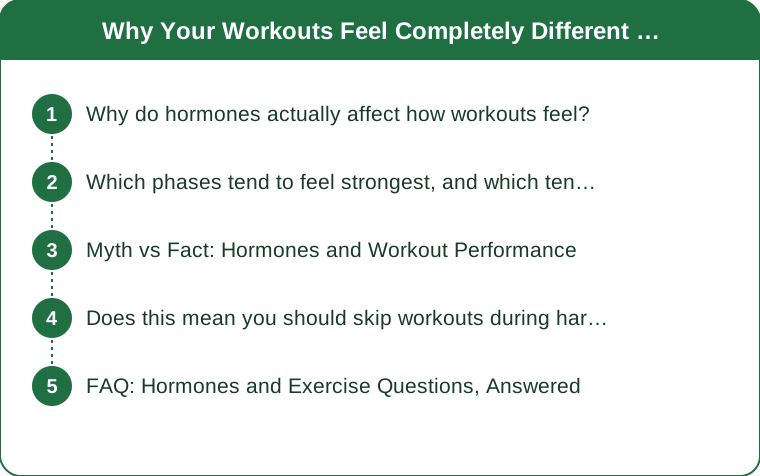
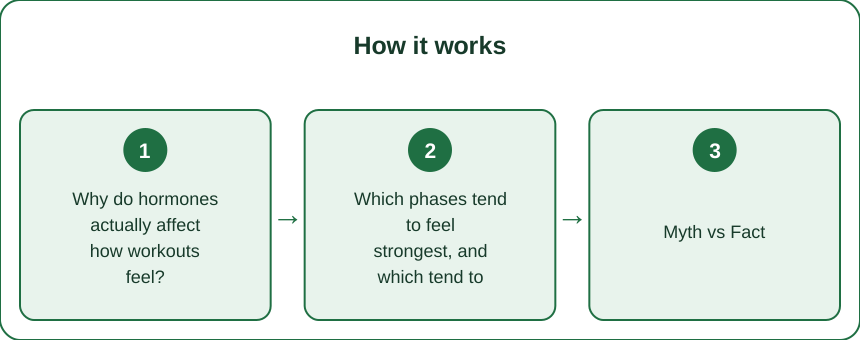
Why do hormones actually affect how workouts feel?
Because estrogen and progesterone influence energy metabolism, body temperature, and even pain perception, all of which shift the perceived difficulty of the exact same workout across the month.
Estrogen, which rises through the first half of the cycle, is associated with improved energy and a slightly higher pain tolerance, while progesterone’s rise in the second half is linked to increased core body temperature and, for some, more perceived fatigue.
Which phases tend to feel strongest, and which tend to feel harder?
The follicular phase (roughly the first 1-14 days, ending at ovulation) is when many people report their best strength and energy, correlating with rising estrogen levels during that window.
The luteal phase, particularly the final week before a period, is more commonly associated with lower energy, higher perceived effort, and increased recovery needs — this varies significantly between individuals, but the pattern is common enough to plan around.

Myth vs Fact: Hormones and Workout Performance
Myth: A harder-feeling workout during the luteal phase means you’re losing fitness. Fact: perceived effort during this phase is often genuinely higher for the same objective output — actual fitness is not declining, the workout just costs more energy to complete.
Myth: You should train exactly the same way every week of the cycle. Fact: many athletes and coaches now intentionally adjust intensity slightly across the cycle — not because lower-energy weeks mean weakness, but because working with the pattern tends to produce better long-term consistency.
Does this mean you should skip workouts during harder phases?
Not necessarily — lower-intensity or technique-focused sessions during the luteal phase can maintain consistency without forcing peak performance during a week when it’s genuinely harder to access.
Tracking your own pattern over 2-3 cycles (noting energy and perceived effort alongside your cycle phase) gives a far more personalized picture than general guidelines, since individual variation in this response is substantial.
FAQ: Hormones and Exercise Questions, Answered
Does this pattern apply to everyone the same way?
No — while the hormonal fluctuations themselves are consistent, how strongly they affect perceived workout difficulty varies significantly between individuals, and some people notice very little difference.
Should I lift heavier during the follicular phase specifically?
Some research and anecdotal coaching experience supports slightly higher-intensity training during this window, but it’s not essential — consistency across the month matters more than precisely timing your hardest sessions.
Is it normal for this pattern to change from cycle to cycle?
Yes — stress, sleep, and other factors can shift how noticeable the pattern is from month to month, so some cycle-to-cycle variation in how workouts feel is expected.
TL;DR:
- Estrogen and progesterone fluctuations genuinely affect energy and perceived workout difficulty
- The follicular phase (first half of the cycle) often feels strongest for many people
- The week before a period is commonly associated with lower energy and higher perceived effort
- A harder-feeling workout during this phase doesn’t mean you’re losing fitness
Try tracking your energy alongside your cycle for a couple of months — the pattern is often more consistent than it feels in the moment.
Keep Reading
This article is for general informational and styling purposes only. Fit, sizing, and product availability may vary.