Why Your Appetite Spikes the Week Before Your Period (You Are Not Imagining It)
Quick Answer: In the week or so before a period - the late luteal phase - metabolic rate genuinely rises by a small but real margin, progesterone shifts appetite signaling upward, and serotonin dips nudge cravings specifically toward carbohydrates and sweets. The result is hunger that is physiological, not a discipline failure, typically amounting to a real increase of roughly 100-300 calories of drive per day for many women. The strategy that works is planned accommodation - front-loading protein, scheduling the treats, easing training expectations - rather than white-knuckle resistance that reliably ends in the 9pm pantry raid.
For three weeks a normal lunch holds you to dinner. Then one week a month, you are rummaging by 3pm, thinking about bread at meetings, and standing in front of the refrigerator an hour after eating. Then your period arrives and the hunger evaporates like it was never there. That pattern is not a willpower cycle. It is an endocrine one.

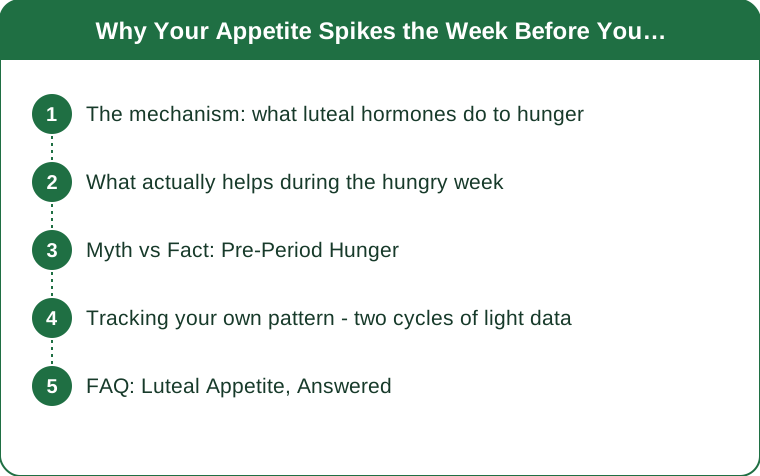
The mechanism: what luteal hormones do to hunger
Three overlapping shifts, all documented, all invisible from the inside.
Your metabolic rate actually rises. After ovulation, progesterone climbs, and with it core body temperature and resting energy expenditure - measurement studies put the late-luteal increase at roughly 2-8 percent, commonly landing around 100-300 extra calories per day. The hunger is partly your body accurately invoicing for a real expense. This is the piece almost nobody is told, and it reframes the entire week.
Progesterone is mildly appetite-promoting, and estrogen’s appetite-suppressing effect fades. Estrogen - which peaks around ovulation and tends to blunt appetite - falls off after mid-cycle while progesterone dominates. The hormonal seesaw that quietly kept hunger polite for two weeks tips the other way. Appetite research across the cycle finds intake reliably highest in the luteal phase, often by a couple hundred calories a day, without anyone deciding anything.
Serotonin dips steer the cravings, not just the volume. Falling estrogen drags on serotonin signaling, and carbohydrate intake transiently supports serotonin production - which is the leading explanation for why late-luteal cravings are so specifically carby and sweet rather than general. The 4pm cookie pull is, in a real sense, a mood-regulation attempt wearing a snack costume.
Add the supporting cast: sleep quality commonly degrades in the late luteal phase, and short sleep independently raises next-day hunger hormones; mild fluid shifts and digestive sluggishness change how fullness feels; and for those with strong PMS or PMDD, mood symptoms amplify comfort-eating pull further.
The takeaway is not that resistance is impossible - it is that the baseline moved. Planning for the moved baseline outperforms pretending it did not move.
What actually helps during the hungry week
Accommodation with structure beats both surrender and siege.
Add a planned 100-250 calories, on purpose, in protein and volume. The counterintuitive move that works: acknowledge the invoice and pay it deliberately - a bigger breakfast, an extra snack of Greek yogurt, cottage cheese, edamame, or fruit with nut butter - rather than under-eating all day and settling the account at the pantry at 9pm. Women who formalize the luteal add-on routinely eat less overall than women who resist until the dam breaks.
Front-load protein and fiber hard. Protein is the most satiating macronutrient per calorie, and luteal hunger is exactly when 25-30 grams at breakfast and lunch earns its keep. Oats, eggs, berries, lentils, and the boring high-fiber staples blunt the blood-sugar swing that stacks on top of hormonal hunger and makes 4pm feel like an emergency.
Schedule the carbs you are craving instead of dodging them. A planned afternoon carb-plus-protein snack - toast with peanut butter, rice cakes and cheese, a real dessert after dinner twice that week - meets the serotonin-seeking pull halfway. Scheduled treats satisfy; ambushed treats snowball.
Downshift training expectations, not training. The late luteal phase is a fine time for strength maintenance, walks, and easy sessions, and a poor time to chase personal records or start aggressive calorie cuts - the same workout genuinely feels harder for many women in this window. If your leggings feel tighter and the scale jumps two pounds, that is fluid and glycogen theater, not fat - it exits with your period, and knowing that spares you the compensatory-restriction spiral.
Protect sleep like it is part of nutrition - because this week it is. The luteal sleep dip feeds next-day hunger directly; an earlier wind-down and a cooler bedroom during that week are appetite interventions in disguise.

Myth vs Fact: Pre-Period Hunger
Myth: PMS cravings are purely psychological. Fact: Cycle-phase studies measure real increases in energy expenditure and food intake in the luteal phase, with hormonal mechanisms mapped for both volume and the carb-specific tilt. The psychology rides on top of physiology, not instead of it.
Myth: Giving in to luteal hunger causes weight gain. Fact: A few hundred deliberate extra calories against a raised expenditure is roughly a wash, and the scale bump that week is dominated by water and glycogen. What drives actual gain is the restrict-crash-raid loop - the siege strategy, not the accommodation.
Myth: Craving chocolate means a magnesium deficiency. Fact: The magnesium-craving story is folklore with weak support - chocolate cravings track culture, serotonin dips, and chocolate being delicious. Magnesium adequacy matters for other reasons, but a square of dark chocolate is not a lab result.
Myth: The hungry week means your diet failed. Fact: A plan that ignores the luteal phase fails one week in four by design. The fix is periodizing the plan - slightly higher intake, higher protein, gentler training that week - not repeatedly re-failing the same rigged test.
Myth: Appetite swings this strong must mean something is wrong. Fact: A late-luteal surge that resolves with menstruation is textbook. What warrants a clinician: hunger patterns paired with severe mood disruption (possible PMDD), cycles that have changed character markedly, binge episodes that feel out of control, or luteal symptoms colliding with perimenopause - all real, all treatable, none of them willpower problems.
This is general information, not medical advice.
Tracking your own pattern - two cycles of light data
Generic advice ends where your specific pattern begins.
Log four things for two cycles: cycle day, a 1-5 hunger score at evening, sleep quality, and any standout cravings. Two minutes a night in a notes app - no calorie counting required. Most women see their signature inside one cycle: hunger rising at a consistent cycle day, peaking in a consistent window, vanishing with flow.
Pre-position the environment for your known window. Once you know your days - say, day 22 through 27 - groceries change the week before: protein snacks stocked, planned treats purchased in single-serving form, the trigger foods that ambush you simply not in the house those days. Environmental design during a known hormonal window beats in-the-moment discipline every single month.
Put the window on the calendar like weather. A private hungry week note two days ahead changes the internal narrative from what is wrong with me to right on schedule - and that reframe alone dissolves a surprising share of the guilt-eat-guilt spiral. Partners and training plans can see the forecast too.
Watch for the patterns that deserve escalation. Hunger scores pinned at 5 with mood crashes that disrupt work or relationships suggest PMDD-range symptoms worth a clinician conversation. A previously mild luteal phase turning fierce in your 40s is a common perimenopause signature. And any pattern of eating that feels frightening rather than annoying - secrecy, loss of control, compensating - is a reason to talk to a professional early, not a personal failing to manage alone.
Then automate the response. The mature version of this system is boring: calendar note fires, protein breakfast doubles, the afternoon snack appears, training plan shows easy sessions, dessert is scheduled Tuesday and Friday, bedtime moves up thirty minutes. Hunger arrives, gets fed on schedule, and leaves with your period - demoted from monthly crisis to line item.
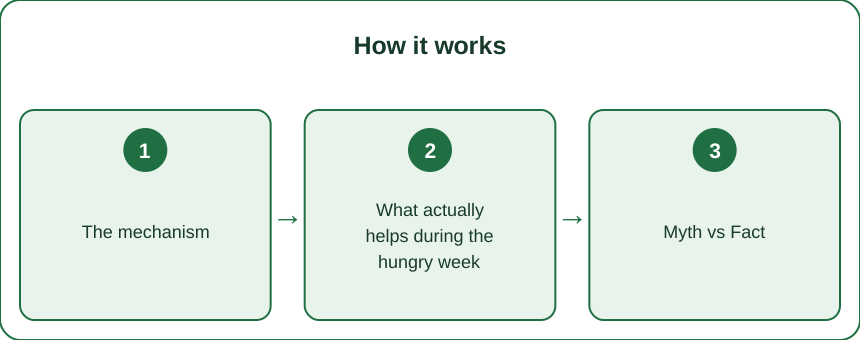
FAQ: Luteal Appetite, Answered
How many extra calories does the week before a period actually burn?
Measured luteal increases in resting expenditure commonly land around 2-8 percent - roughly 100-300 calories a day for many women, varying by person and cycle. The matching rise in appetite is your body billing for it; a deliberate, protein-leaning add-on in that range is a reasonable response.
Why do I crave carbs and sugar specifically before my period?
Falling estrogen drags serotonin signaling down in the late luteal phase, and carbohydrates transiently support serotonin production - so the craving aims itself at bread, sweets, and chocolate rather than food generally. Scheduled carb-plus-protein snacks meet the mechanism halfway without the crash.
Is it normal to gain weight that week?
A one-to-three pound rise is standard and overwhelmingly water, glycogen, and digestive contents, driven by progesterone and fluid shifts - it typically exits within days of flow starting. Judging body-composition progress during the late luteal week is measuring during a storm; compare same-phase to same-phase instead.
Should I diet harder to counteract pre-period hunger?
The opposite works better: hold intake near maintenance with extra protein and planned treats during the surge, and place any deficit efforts in the follicular weeks when appetite and energy naturally run lower. Fighting the luteal surge head-on is the most common failure point of the entire diet cycle.
When is cycle-linked hunger worth seeing a doctor about?
When it pairs with mood symptoms severe enough to disrupt life (PMDD territory), when eating episodes feel out of control, when the pattern changes sharply in your 40s, or when heavy cycles and fatigue travel together. A symptom log across two cycles is exactly the artifact that makes that appointment productive.
TL;DR:
- Late-luteal hunger is measured physiology: expenditure up roughly 100-300 calories, progesterone promoting appetite, serotonin dips aiming cravings at carbs.
- Pay the invoice on purpose - planned protein-forward additions and scheduled treats - instead of resisting until the 9pm raid.
- The scale bump is water and glycogen theater; ease training intensity that week and protect sleep like it is nutrition.
- Two cycles of two-minute logging reveals your exact window; pre-position groceries and calendar it like weather.
- Escalate to a clinician for PMDD-range mood crashes, out-of-control eating, or a pattern that changes sharply - none of that is a willpower problem.
The hungriest week of your month has a start date, a mechanism, and an end date. Feed it on schedule and it stops running the show.
Keep Reading
This article is for general informational and styling purposes only. Fit, sizing, and product availability may vary.