Why the Exact Same Workout Feels So Much Harder Some Weeks Than Others
Quick Answer: The same workout genuinely can feel measurably harder in the days leading up to your period and easier in the first half of your cycle, largely because shifting estrogen and progesterone levels affect perceived exertion, core temperature, and even how efficiently your body uses carbohydrate for fuel.
You didn’t sleep worse, you didn’t skip meals, and the plates on the bar are the same ones from last week — yet everything from the warmup onward feels like it’s fighting you. That’s a real physiological shift, not a motivation problem.

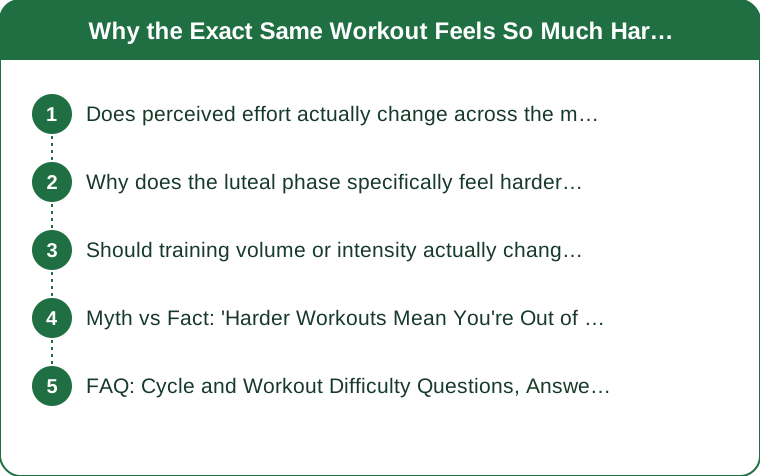
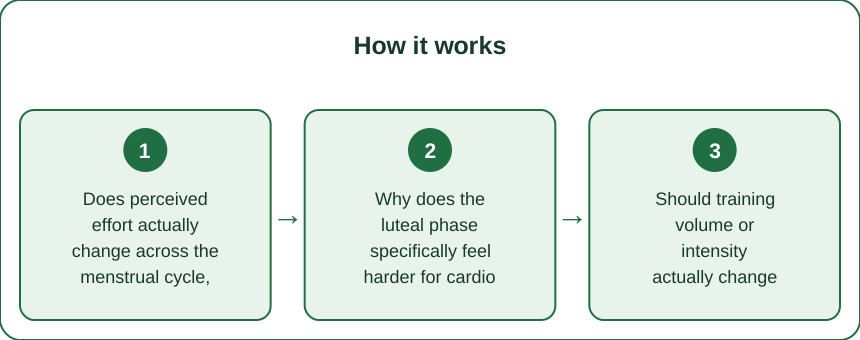
Does perceived effort actually change across the menstrual cycle, or does it just feel that way?
It’s measurably real, not just a subjective impression — research on perceived exertion shows the same workload can register as noticeably harder in the luteal phase (roughly the two weeks before your period) compared to the follicular phase right after it, largely tied to progesterone’s effects on breathing rate and core temperature.
Why does the luteal phase specifically feel harder for cardio and strength both?
Progesterone rises steadily through the luteal phase and slightly elevates resting core temperature and breathing rate, meaning your body is starting the workout from a slightly different baseline — you reach a harder-feeling zone at a lower actual workload than you would earlier in the cycle. Some women also notice reduced carbohydrate efficiency during this window, adding to the fatigue.

Should training volume or intensity actually change week to week because of this?
Many coaches suggest leaning into higher intensity work during the follicular phase (when energy and recovery both tend to run better) and treating luteal-phase weeks as reasonable for maintaining rather than pushing new personal records. This isn’t a hard rule for everyone — some women notice little cycle-related difference — but if a workout consistently feels harder the same week every month, that’s a real, trackable pattern worth working with rather than against.
Myth vs Fact: ‘Harder Workouts Mean You’re Out of Shape’
Myth: if a familiar workout suddenly feels much harder, fitness has declined. Fact: a single harder-feeling session, especially one that recurs on a monthly pattern, is far more likely to be hormonal fluctuation than lost fitness — checking whether the hard weeks line up with your cycle before assuming a fitness regression saves a lot of unnecessary discouragement.
FAQ: Cycle and Workout Difficulty Questions, Answered
Does this pattern apply the same way to every woman?
No — some women notice a strong, consistent pattern and others notice very little; tracking your own sessions against your cycle for two or three months is the only way to know your personal pattern.
Should I skip workouts entirely during the harder week?
Usually not necessary — reducing intensity or volume slightly, rather than skipping, tends to work better for both consistency and how you feel.
Does hormonal birth control change this pattern?
Often yes, since many forms of hormonal birth control flatten the natural hormone fluctuation that drives this effect, which is part of why some women on birth control notice less week-to-week variation.
TL;DR:
- The luteal phase (roughly the two weeks before your period) commonly makes the same workout feel objectively harder
- Elevated progesterone raises core temperature and breathing rate, shifting your effort baseline
- Leaning into intensity during the follicular phase and maintaining during the luteal phase works with, not against, the pattern
- A recurring monthly pattern of harder sessions is far more likely hormonal than a fitness decline
If the same workout keeps feeling harder the same week every month, that’s data, not a bad day — and it’s worth training around instead of fighting.
Keep Reading
This article is for general informational and styling purposes only. Fit, sizing, and product availability may vary.