Muscle Is an Organ: How Strength Training Talks to Your Hormones
For most of the last century, muscle was filed under plumbing — the thing that moves bones. Then researchers noticed that contracting muscle releases signaling molecules into the bloodstream, and the filing system had to change. Muscle isn’t just tissue you use. It’s tissue that talks.
Quick Answer: Contracting muscle releases signaling molecules called myokines that communicate with your metabolism, brain, and immune system — which is why muscle is now classified as an endocrine organ. Strength training also improves insulin sensitivity independently of weight loss, because muscle is the body’s largest site for storing glucose. Two to three sessions a week of progressively loaded compound movements, with adequate protein, is the dose most guidelines point to.

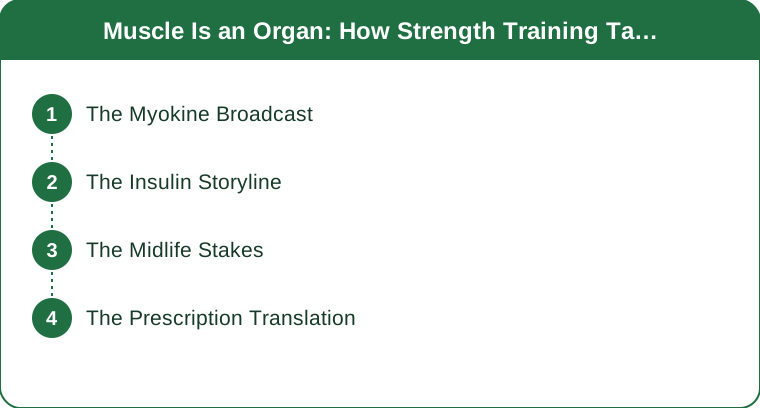
What Are Myokines, and Why Do They Matter?
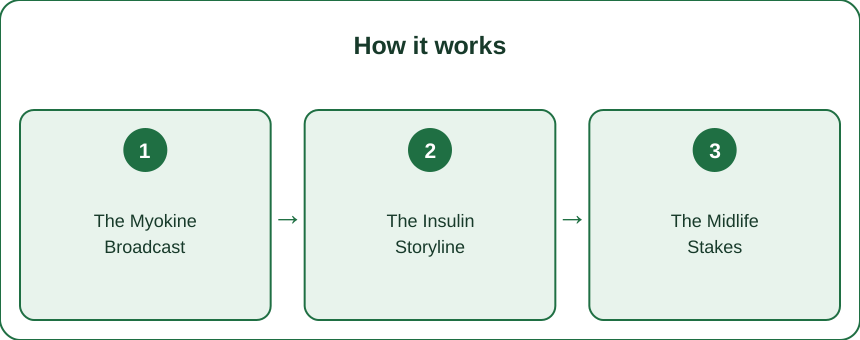
Myokines are proteins that muscle cells release when they contract. Researchers have identified a growing catalogue of them, and the broad picture is that they act as messengers between muscle and the rest of the body.
The general findings that have held up across the research:
- Anti-inflammatory signaling. Regular muscle contraction is associated with a lower chronic inflammatory load
- Metabolic communication. Myokines appear to influence how fat tissue and the liver handle fuel
- Cross-talk with the brain. Some of the interest in exercise and cognition traces back to molecules released by working muscle
The practical framing is simpler than the biochemistry: sedentary muscle is quiet, and active muscle broadcasts. Every strength session is a signal to the rest of the body that this system is in use and worth maintaining.
Worth being honest about the state of the science: this is an active research area, and the specific mechanisms are still being worked out. What’s well established is the direction — regular resistance training produces broad metabolic benefits that go well beyond the muscle itself.

How Does Strength Training Affect Insulin Sensitivity?
Muscle is the body’s largest glucose warehouse. More muscle, used regularly, means carbohydrate from a meal has somewhere productive to go.
Two things happen with consistent resistance training:
More storage capacity. Larger, more active muscle holds more glycogen, which means more room for glucose after a meal.
Better uptake. Muscle contraction increases glucose uptake through a pathway that works alongside insulin, which is part of why exercise improves blood sugar management independently of how much you weigh.
That second point is the one most people find genuinely useful. This is a metabolic improvement that often doesn’t show on the scale — muscle is denser than fat, so body composition can shift meaningfully while the number barely moves. It shows up in bloodwork rather than in the bathroom mirror.
What it doesn’t mean: strength training isn’t a treatment for diabetes or insulin resistance on its own. It’s a well-supported part of managing metabolic health alongside medical care, not a replacement for it.

Why Do the Stakes Rise in Midlife?
Because muscle mass declines gradually from around the third or fourth decade unless something actively prevents it — and it takes several useful things with it.
What tends to go along with it:
- Resting metabolic rate, since muscle is metabolically active tissue
- Glucose management capacity, since the warehouse shrinks
- Functional strength reserves, which matter enormously for independence later
- Bone density, which responds to the mechanical loading that resistance training provides
For women, the perimenopausal and menopausal transition adds another layer, as shifting estrogen levels affect both muscle maintenance and bone density. This is precisely the window where resistance training moves from “good idea” to “high priority,” and it’s also the window where many people stop.
The framing that helps: you’re not training for appearance at this stage. You’re keeping an endocrine organ on staff through the decades that need it most.
5 Mistakes Everyone Makes
- Training with weights that never get heavier. Adaptation requires progressive load. The same 5 lb dumbbells for two years produce the fitness you had two years ago.
- Doing only isolation exercises. Compound movements — squat, hinge, push, pull — recruit far more muscle per minute, which is exactly what you want when the muscle is the point.
- Skipping protein. You can’t build tissue from nothing. Most guidance for people doing resistance training lands well above the minimum RDA; a registered dietitian can give you a number for your situation.
- Assuming cardio covers it. Cardio has its own substantial benefits and does not build or preserve much muscle. They’re complements, not substitutes.
- Training the same muscles daily. Adaptation happens during recovery. Two or three sessions a week with rest between them outperforms six exhausted ones.
The first mistake is the most common by a wide margin, because “I go to the gym” feels like it should be enough — and it’s the load, not the attendance, that drives the change.
What Does the Effective Dose Look Like?
Unheroic. That’s the good news.
- Frequency: 2–3 sessions a week, with at least a day between sessions for the same muscle groups
- Movements: compound patterns — a squat, a hinge, a push, a pull — covering the whole body
- Volume: roughly 2–4 sets of 6–12 reps per movement
- Load: heavy enough that the last two reps are genuinely difficult, and increased every few weeks
- Protein: adequate intake spread across the day, rather than concentrated in one meal
- Time: 30–45 minutes per session is plenty
Equipment barely matters at the start. Bodyweight, resistance bands, or a pair of adjustable dumbbells all work — what matters is that the load goes up over time. Comfortable kit removes one small barrier: a squat-proof high waist legging that stays put through a heavy set means you’re thinking about the lift rather than the waistband.
When to talk to a professional: if you have a heart condition, uncontrolled blood pressure, diabetes, a previous injury, or you’re pregnant or postpartum, check with your doctor before starting a new resistance program. A few sessions with a qualified trainer is also genuinely worthwhile for learning the compound lifts — form matters more here than in most exercise, and it’s much easier to learn correctly than to unlearn.
FAQ
How long before strength training affects my metabolism?
Some effects on glucose handling appear within days to weeks of consistent training. Meaningful changes in muscle mass take a few months, and the metabolic benefits build alongside them.
Do I need to lift heavy to get these benefits?
You need to lift progressively — meaning the challenge increases over time. That can start with bodyweight or light bands. “Heavy” is relative to you, and the requirement is that the last couple of reps are genuinely hard.
Is cardio or strength training better for metabolic health?
They do different jobs and both matter. Cardio is strong for cardiovascular fitness; strength training is what builds and preserves the muscle that handles glucose. Most guidelines recommend both.
TL;DR:
- Muscle releases myokines when it contracts, which is why it’s classified as an endocrine organ
- Strength training improves insulin sensitivity independently of weight change
- Muscle declines from midlife onward unless actively maintained, taking metabolic rate with it
- The dose: 2–3 sessions weekly, compound movements, progressively loaded, adequate protein
- Progressive load is the requirement — attendance without added challenge doesn’t drive adaptation
- Check with a doctor before starting if you have any relevant health condition
Muscle broadcasts, warehouses glucose, and negotiates with every decade. Two or three strength training sessions a week keeps the organ chatty — the weight room was doing endocrine work all along, and the science simply caught up.
Keep Reading
This article is for general informational and styling purposes only. Fit, sizing, and product availability may vary.