Sleep: The Hormone Balancer You Can't Supplement Away
You can eat clean, exercise wisely and supplement diligently — but if you’re sleeping five broken hours, your hormones are working against you anyway. Sleep is the master regulator no product can replace. Here’s what happens in your hormonal world when you sleep, and when you don’t.

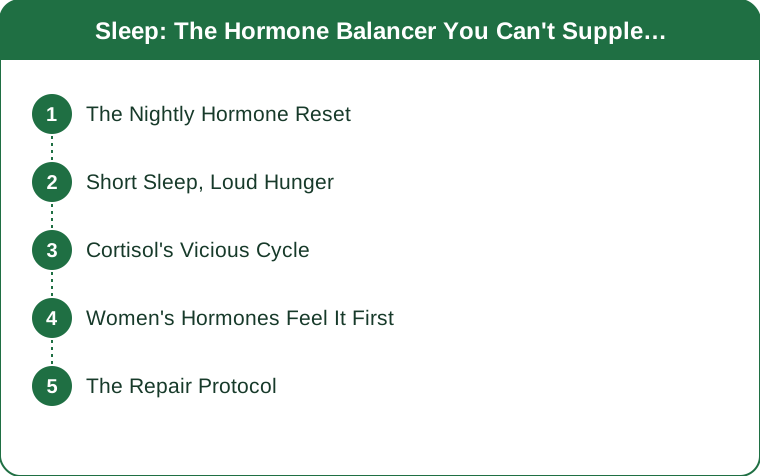
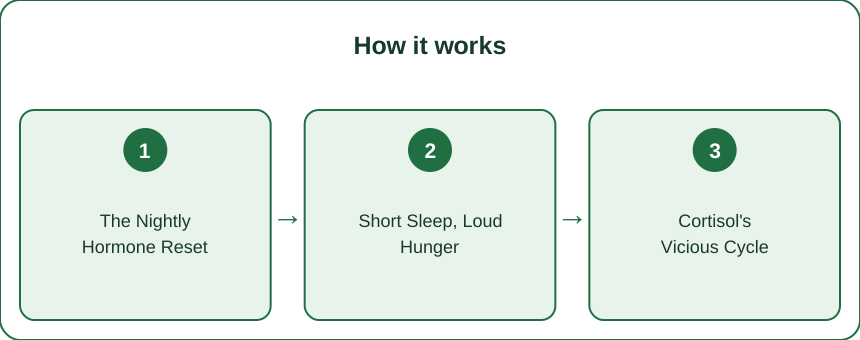
The Nightly Hormone Reset
During deep sleep, cortisol falls, growth hormone surges for repair, and appetite hormones recalibrate. Sleep is your endocrine system’s maintenance window. Skip it and the whole schedule scrambles.
Short Sleep, Loud Hunger
Even a few bad nights raise ghrelin (hunger up) and lower leptin (fullness down) - hello 4pm cravings. It also blunts insulin sensitivity within days. Willpower isn’t your problem; sleep debt is.

Cortisol’s Vicious Cycle
Poor sleep elevates cortisol, and high cortisol disrupts sleep - a loop that leaves you wired-tired. Breaking it requires treating sleep as non-negotiable for a couple of weeks. The loop breaks faster than you’d fear.
Women’s Hormones Feel It First
Sleep disruption ripples into cycles, PMS intensity and perimenopause symptoms. If your cycle feels chaotic, audit your sleep before anything fancier. It’s the cheapest hormone therapy there is.
The Repair Protocol
Consistent bed and wake times, a dark cool room, screens off 45 minutes before bed, caffeine finished by early afternoon. Boring advice, spectacular hormonal returns. Two weeks of this outperforms most supplements in your cabinet.
Every hormone you’re trying to optimize reports to sleep first. Guard seven to nine consistent hours - dark room, steady schedule, screens off early - and watch appetite, energy, mood and cycles settle. Sleep isn’t rest from your health plan; it IS the health plan.
Keep Reading
This article is for general informational and styling purposes only. Fit, sizing, and product availability may vary.