How to Adjust Your Workout Around Normal Hormone Swings, Not Fight Them
Quick Answer: Energy, strength, and recovery capacity genuinely shift across a normal hormone cycle — this isn’t an excuse, it’s physiology. Matching harder training to higher-capacity phases and easing intensity during lower ones tends to produce better long-term results than forcing identical effort every single day.
Training like every day should feel the same ignores real physiological variation — and fighting that variation usually backfires more than working with it.

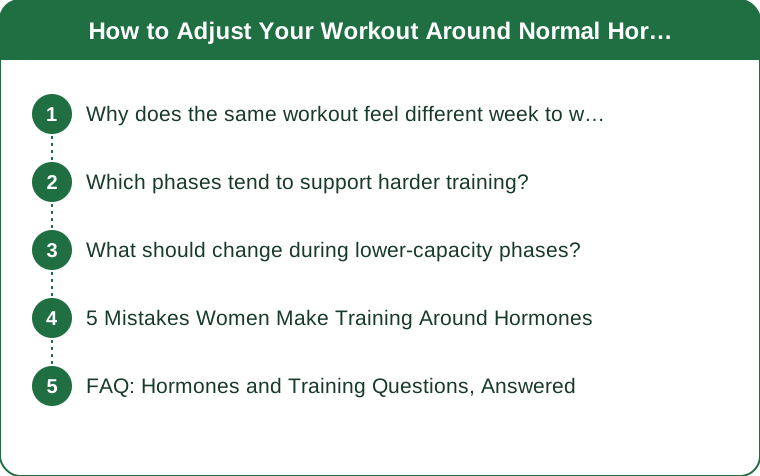
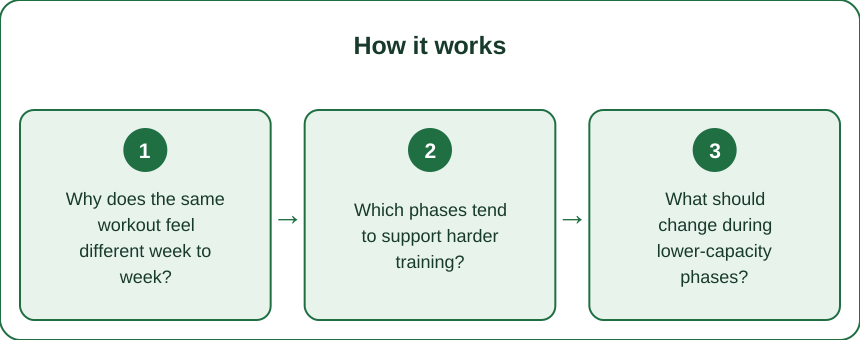
Why does the same workout feel different week to week?
Estrogen and progesterone shift substantially across a cycle, and these hormones influence things like body temperature, fluid retention, and perceived exertion — meaning the same workout can genuinely feel harder or easier depending on timing, independent of actual fitness level.
Which phases tend to support harder training?
Many people report more consistent strength and easier high-intensity effort in the days following a period, when hormone levels are lower and relatively stable. This is a general pattern, not a guarantee, since individual variation is significant.

What should change during lower-capacity phases?
Swapping a planned max-effort session for moderate strength work or lower-intensity cardio during a harder phase isn’t ‘giving up’ — it’s matching effort to actual current capacity, which tends to preserve consistency better than forcing a session that isn’t landing well that day.
5 Mistakes Women Make Training Around Hormones
- Ignoring the pattern entirely and wondering why some weeks feel inexplicably harder. 2. Overcorrecting by skipping all training during lower-energy phases instead of just adjusting intensity. 3. Comparing performance day to day rather than looking at monthly trends. 4. Not tracking anything, which makes the pattern invisible. 5. Assuming textbook cycle phases apply exactly to their own body without checking against their actual experience.
FAQ: Hormones and Training Questions, Answered
Does this apply the same way to everyone?
No — cycle length, hormonal conditions, and individual sensitivity all vary, so general phase patterns are a starting point to test against your own experience, not a fixed rule.
Should I track anything to notice my own pattern?
A simple log of energy level and workout performance alongside cycle day for two to three months usually reveals a personal pattern clearly enough to plan around.
Is it bad to just train the same way every day regardless?
Not bad, but it may mean missing opportunities to push harder when capacity is naturally higher and unnecessarily grinding through days when easing off would serve you better.
TL;DR:
- Hormone shifts across a cycle are real and affect training capacity
- Higher-capacity phases suit harder strength or intensity work
- Lower phases call for moderate adjustments, not skipping entirely
- Tracking energy against cycle day for a few months reveals your own pattern
Working with natural fluctuation tends to build more consistency than forcing identical effort on days your body isn’t matching it.
Keep Reading
This article is for general informational and styling purposes only. Fit, sizing, and product availability may vary.