Hormonal Changes by Decade: What Actually Shifts in Your 20s, 30s, and 40s
Quick Answer: Your 20s typically bring the most stable hormone cycles, your 30s often introduce more cycle variability tied to stress and life changes, and your 40s bring the perimenopause transition where estrogen becomes less predictable — each decade calls for different training and recovery expectations.
The same workout that worked effortlessly at 24 can feel completely different at 38, and that’s not you losing fitness — it’s a real hormonal shift worth understanding.

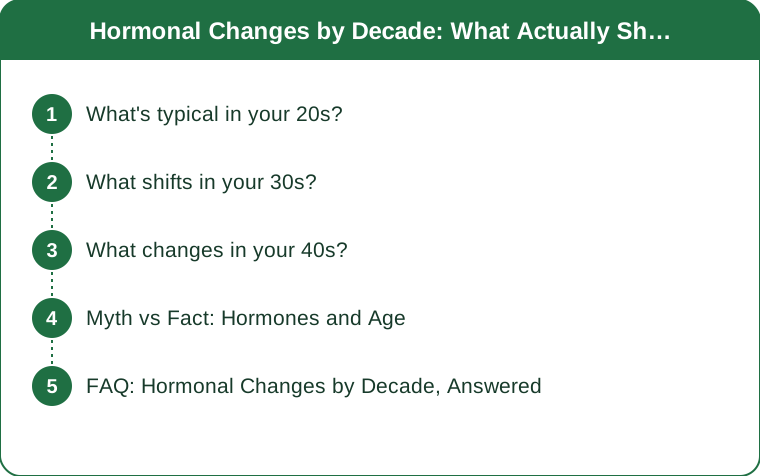
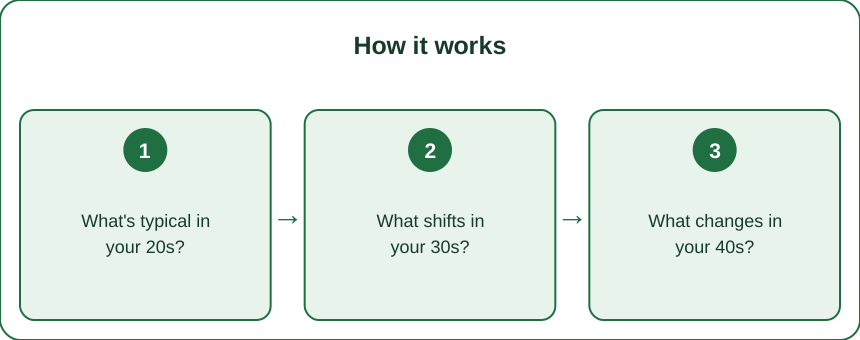
What’s typical in your 20s?
Cycles tend to be more predictable and hormone levels more stable for most people in their 20s, assuming no underlying conditions. This is often when people build training habits without needing to think much about cycle-phase adjustments — which can make later decades’ changes feel confusing by comparison.
What shifts in your 30s?
Many people notice more cycle variability, often tied less to age itself and more to accumulating life stressors — career demands, family changes, and sleep disruption all interact with hormone regulation. This is a good decade to start paying attention to how stress, not just training load, affects your cycle and recovery.

What changes in your 40s?
Perimenopause — the transition leading up to menopause — often begins in the 40s, bringing more unpredictable estrogen levels, which can affect sleep, mood, and how your body responds to training. Recovery time between hard sessions often needs to increase during this transition, even if your fitness level hasn’t changed.
Myth vs Fact: Hormones and Age
Myth: Hormonal changes only matter after menopause. Fact: Perimenopause, which can start years before menopause itself, brings meaningful shifts worth adjusting training around.
Myth: You should train exactly the same way through every decade. Fact: Recovery needs and cycle predictability genuinely change — adjusting intensity and rest isn’t giving up, it’s adapting appropriately.
Myth: Irregular cycles in your 30s always mean something is wrong. Fact: Some variability is common and often stress-related, though persistent major changes are worth discussing with a doctor.
FAQ: Hormonal Changes by Decade, Answered
When should I actually see a doctor about hormone changes?
If cycle changes are sudden, severe, or paired with other new symptoms (significant fatigue, mood changes, heavy bleeding), rather than gradual and mild — that’s worth a professional evaluation.
Does exercise help manage hormonal shifts across decades?
Regular strength training and moderate cardio are generally supportive for hormonal health at every decade, though intensity and recovery needs shift.
Is perimenopause the same experience for everyone?
No — timing, symptoms, and severity vary widely between individuals, which is part of why it can be confusing to identify without tracking changes over time.
TL;DR:
- 20s: generally the most stable, predictable hormone cycles
- 30s: often more variability, frequently tied to accumulating life stress
- 40s: perimenopause can begin, bringing less predictable estrogen and longer recovery needs
- Training and recovery expectations reasonably shift decade to decade
This is general information, not medical advice — persistent or severe changes deserve a conversation with a doctor, not just a training adjustment.
Keep Reading
This article is for general informational and styling purposes only. Fit, sizing, and product availability may vary.