How Exercise Supports Hormone Balance
Some mornings you’re ready to take on the world; other days getting out of bed feels like wading through wet cement, and it’s usually not about willpower. That flip-switch feeling often traces back to hormones — the quiet chemical messengers running the show behind almost everything you feel.
Quick Answer: Exercise supports hormone balance by improving insulin sensitivity, helping manage cortisol (your main stress hormone), and triggering mood-boosting endorphins — but only when the type and amount actually match your body’s needs. A mix of strength training, moderate cardio, and restorative movement like yoga, paired with real recovery, beats hammering any single type of workout.
Your hormones quietly influence almost everything — your mood, energy, sleep, metabolism, and more — and when they’re out of balance, you feel it. Exercise turns out to be one of the most powerful, accessible tools for supporting healthy hormone balance.

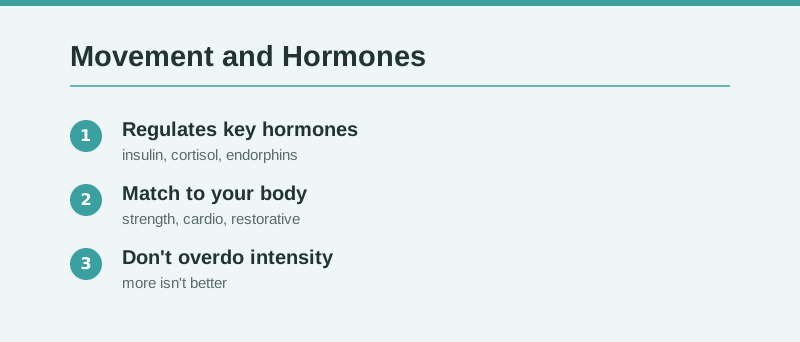
How does exercise regulate your hormones?
Regular, moderate exercise helps regulate several important hormones at once. It improves insulin sensitivity (supporting steadier blood sugar and energy), helps manage cortisol (your primary stress hormone), and triggers the release of mood-boosting endorphins.
This balancing effect supports steadier energy, better mood, and healthier overall hormone function over time. Movement is, in a very real sense, a form of hormonal maintenance — a way of keeping your body’s chemical messengers running smoothly, day after day.

Which type of exercise is best for your hormones?
Different types of movement affect your hormones differently, so variety serves you well. Strength training supports metabolism and healthy muscle; moderate cardio benefits your heart and mood; and restorative movement like yoga helps lower stress hormones.
A balanced mix — say, 2 to 3 strength sessions, 1 to 2 cardio sessions, and a slower practice like yoga each week — supports hormone health far better than relentlessly hammering any single type. Listen to your body and adjust: some weeks call for more intensity, others for more gentleness.

Can too much exercise actually hurt your hormones?
Here’s a crucial and often-missed point: too much intense exercise can actually raise stress hormones and work against hormone balance. Chronically overtraining without adequate recovery keeps cortisol elevated and can disrupt other hormones, including those tied to your cycle and metabolism.
More is not always better — past a certain point, it works against you. Balancing hard effort with genuine rest and recovery is what keeps your hormones happy, so build rest days into your routine and actually honor them instead of squeezing in “just one more session.”

Why does recovery matter for hormone balance?
Recovery isn’t the absence of training — it’s an essential part of it, especially for hormone health. Adequate sleep (aim for 7 to 9 hours), rest days, and stress management all directly affect your hormones, and no amount of exercise compensates for chronically neglecting them.
Prioritizing good sleep and real recovery alongside your workouts is what allows exercise to support your hormones rather than add to the load. Rest is where the actual balancing happens — the workout just sets it up.
Is consistency really better than intensity?
The throughline for hormone-supporting exercise is consistency rather than extremes. A steady, balanced routine of varied, moderate movement — sustained over months, paired with good recovery — supports hormone health far more than dramatic bursts followed by burnout.
Gentle consistency is genuinely the goal here. Find a sustainable rhythm of movement you can maintain for years, not just weeks, and your hormones (and the rest of you) will thank you for it.
Myth vs fact: exercise and hormones
- Myth: More cardio always means better hormone balance. Fact: past a certain point, excessive cardio without recovery raises cortisol and can backfire — moderate, varied movement wins.
- Myth: Strength training is only about muscle, not hormones. Fact: resistance training meaningfully supports insulin sensitivity and metabolic hormone health, not just muscle size.
- Myth: Rest days undo your progress. Fact: rest days are when a lot of the hormonal balancing actually happens — skipping them consistently works against you.
- Myth: Yoga is “not real exercise.” Fact: restorative movement like yoga plays a genuine, measurable role in lowering stress hormones — it’s a legitimate part of a hormone-supporting routine, not just a bonus.
Can exercise alone fix hormone imbalances?
Exercise is a powerful supporting tool, but it works best alongside good sleep, nutrition, and stress management. If you suspect a more significant hormone issue — like thyroid problems or PCOS — talk to a doctor for proper testing rather than relying on exercise alone.
How long does it take to notice hormone-related benefits from exercise?
Many people notice mood and energy improvements within a few weeks of consistent, moderate movement. Deeper changes, like more stable energy and better sleep, tend to build over 2 to 3 months of sustained habits.
What are signs your exercise routine is hurting your hormones?
Watch for persistent fatigue, poor sleep despite training hard, missed or irregular periods, or feeling constantly “wired but tired.” These are signs to dial back intensity and add recovery — and worth mentioning to a doctor if they don’t improve.
TL;DR
- Exercise supports hormone balance mainly through better insulin sensitivity, managed cortisol, and mood-boosting endorphins.
- Mix strength training, moderate cardio, and restorative movement like yoga rather than doing just one.
- Too much intense exercise without recovery can raise stress hormones and backfire.
- Sleep (7-9 hours) and real rest days are non-negotiable parts of the equation, not extras.
- Consistency over months beats dramatic bursts followed by burnout.
- This isn’t a substitute for medical care — see a doctor for persistent fatigue, irregular cycles, or suspected hormone conditions.
Exercise supports hormone balance by regulating key hormones, but the type and amount matter: match your movement to your body, don’t overdo the intensity, prioritize recovery and sleep, and favor consistency over extremes. A balanced, varied, sustainable routine keeps your hormones — and you — thriving. Movement is powerful hormonal maintenance, as long as it’s balanced with genuine rest.
Keep Reading
This article is for general informational and styling purposes only. Fit, sizing, and product availability may vary.