Can Stress Alone Throw Off Your Hormones Without Anything Else Changing?
Quick Answer: Yes — chronic stress raises cortisol, and sustained high cortisol can suppress reproductive hormone signaling enough to delay ovulation, shorten cycles, or worsen PMS symptoms, even when diet, sleep, and exercise stay completely unchanged.
Everything else in your routine has stayed the same, but your cycle got weird, your energy tanked, or symptoms you used to manage fine suddenly feel worse. Before assuming something else must have changed, it’s worth taking stress itself seriously as the actual cause.

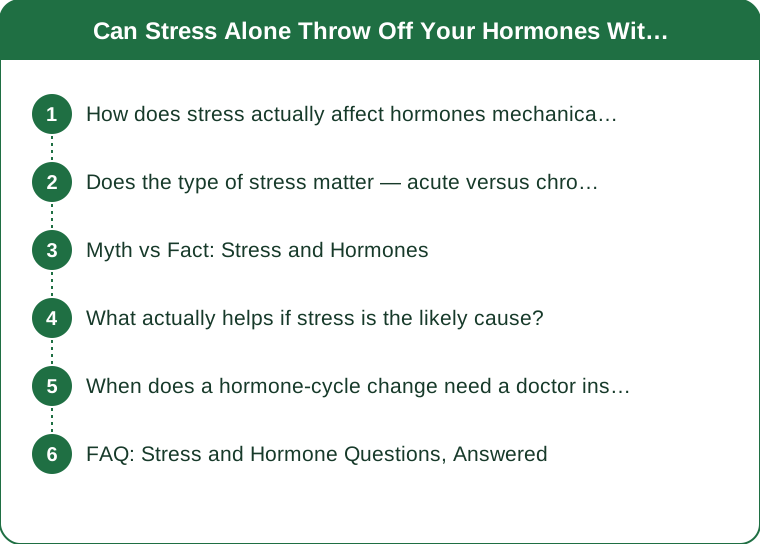
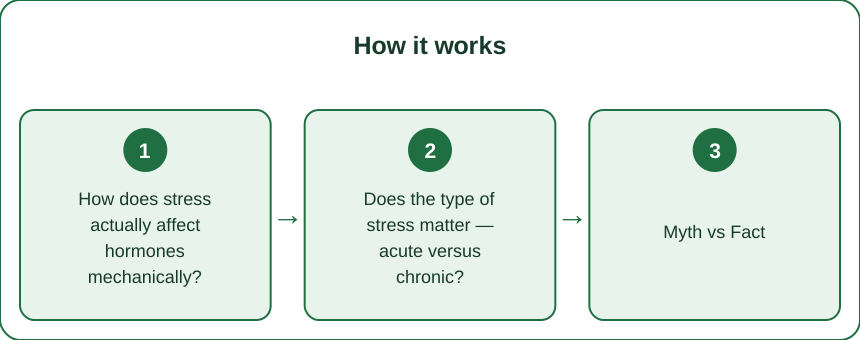
How does stress actually affect hormones mechanically?
Chronic stress keeps cortisol elevated, and cortisol and reproductive hormones share upstream signaling pathways in the brain (specifically involving the hypothalamus). Sustained high cortisol can suppress the signal that triggers ovulation, which is why high-stress periods correlate with delayed or irregular cycles even in people with otherwise stable health. This isn’t a vague mind-body claim — it’s a documented hormonal pathway, not a coincidence.
Does the type of stress matter — acute versus chronic?
Significantly. A single stressful week (a deadline, a hard conversation) rarely shifts hormones enough to notice. It’s sustained stress over weeks to months — a hard semester, a demanding job phase, ongoing relationship strain — that has enough cumulative cortisol elevation to visibly affect cycles, sleep-hormone interaction, and even thyroid function in some cases. Duration matters more than intensity here.
Myth vs Fact: Stress and Hormones
Myth: Stress-related hormone changes are ‘just in your head.’ Fact: The cortisol-reproductive hormone pathway is well-documented physiology, not a psychological explanation standing in for a real one.
Myth: If nothing else changed, stress can’t be the cause. Fact: Stress is frequently the invisible variable — it doesn’t show up on a typical symptom checklist the way diet or sleep changes do, which is exactly why it gets ruled out first instead of checked first.
Myth: You’ll always consciously feel ‘stressed’ if stress is affecting your hormones. Fact: Chronic low-grade stress can run in the background without registering as acute anxiety — busy, tired, and ‘fine’ can still mean elevated cortisol.

What actually helps if stress is the likely cause?
Sleep consistency is the highest-leverage lever — poor sleep and high cortisol reinforce each other in a loop that’s hard to break from either direction alone. Beyond that, even brief daily downregulation practices (10 minutes of walking without your phone, breathing exercises) have measurable cortisol-lowering effects in research, more than most people expect from something so simple.
What doesn’t help: pushing harder in workouts to ‘manage stress,’ since intense exercise itself raises cortisol short-term and can compound an already-elevated baseline.
When does a hormone-cycle change need a doctor instead of stress management?
If cycle changes are severe (missed periods for 3+ months, extremely heavy bleeding, or symptoms significantly disrupting daily life), or if you’ve addressed stress for 2-3 months with no improvement, that’s a see-a-professional situation rather than a self-management one. Stress is a real and common cause, but it shouldn’t be the default explanation that delays checking for other conditions when symptoms are severe.
FAQ: Stress and Hormone Questions, Answered
How long does it take for stress to affect your cycle?
Usually weeks of sustained stress rather than days — a single hard week rarely shows up, but a hard month or quarter often does.
Can reducing stress alone fix a hormone-related cycle change?
Often, yes, if stress was the primary driver and other factors (diet, sleep, health conditions) are stable — improvement typically shows up within 1-3 cycles of meaningfully lower sustained stress.
Is it possible to be stressed without realizing it?
Yes — chronic low-grade stress frequently doesn’t register as the acute ‘stressed’ feeling people expect, which is why it’s worth considering even when you’d describe yourself as generally fine. This is general information, not medical advice.
TL;DR:
- Chronic stress raises cortisol, which can suppress reproductive hormone signaling and delay ovulation
- Duration matters more than intensity — sustained weeks-to-months stress, not one hard day
- You don’t have to consciously feel ‘stressed’ for this pathway to be active
- Severe or 3+ month cycle disruption needs a professional, not just stress management
When nothing else in your routine changed, stress is worth checking first, not ruled out first — the physiology behind it is real, even when the stress itself feels invisible.
Keep Reading
This article is for general informational and styling purposes only. Fit, sizing, and product availability may vary.